Mental Wellness in Motion
Your mental health deserves daily care—not just in moments of stress, but in the quiet in-betweens too. This blog is a space to explore thoughtful insights, therapist-backed guidance, and real-world tools that support emotional balance and personal growth. From building healthier relationships to managing anxiety or cultivating mindfulness, each post is designed to help you feel more grounded, connected, and in control of your inner world.
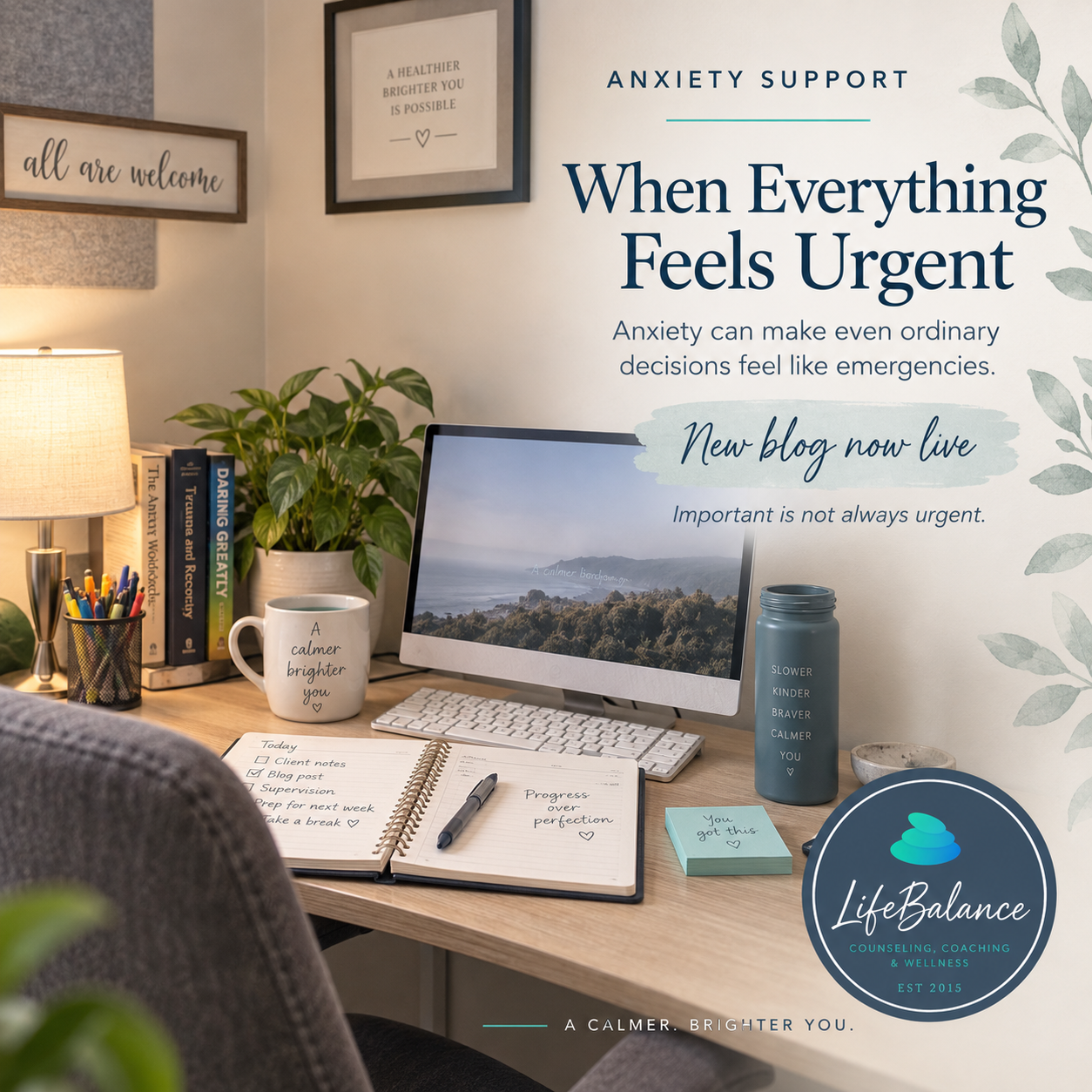
Why Anxiety Makes Everything Feel Urgent, Even When It Isn’t
Have you ever noticed how anxiety can turn almost anything into an emergency?
A text you have not answered.
A decision that does not need to be made today.
A conversation you keep replaying.
A problem you suddenly feel responsible for solving immediately.
Anxiety loves urgency.
It tells us:
Figure it out.
Fix it.
Get certainty.
Do something now.
The problem is that constant urgency keeps the nervous system activated.
And an activated brain is not always the clearest problem-solving brain.
Our newest blog looks at why anxiety creates that pressure and how to begin separating important from urgent.
If your brain regularly turns “I should think about this” into “I need to solve this before lunch,” this one is for you.
When the Seasons Change: Protecting Your Mental Health Before Winter
There is a point every year when I notice it.
Not because the calendar tells me.
Not because someone posts the first pumpkin spice latte.
And not because I suddenly develop a burning desire to decorate everything I own in burnt orange.
It is the light.
The evenings start getting shorter. Mornings look different. The air changes. And here in New England, somewhere between the last warm days of summer and the first real signs of fall, our lives begin changing too.

College Changes Everyone
There is a particular kind of parenting moment that no one really prepares you for.
You spend years helping a child become independent.
You teach them how to make decisions, advocate for themselves, solve problems, recover from mistakes, and eventually function without needing you for every little thing.
Then one day, they actually start doing it.
And somehow that feels both deeply gratifying and just a little rude.
As a parent, I am learning that launching a child into adulthood can bring pride, excitement, relief, fear, grief, and approximately 47 logistical questions about laundry, meal plans, dorm rooms, travel, money, and whether they own enough socks.
Burnout Doesn’t Always Look Like Burnout
There is a version of burnout that most of us recognize.
It looks like someone who cannot get out of bed.
Someone who has stopped showing up.
Someone who says, “I can’t do this anymore.”
But there is another version of burnout that is much easier to miss.
It looks like someone who is still working.
Still parenting.
Still answering the emails.
Still making dinner.
Still driving everyone where they need to go.
Still remembering the appointments.
Still taking care of everyone else.
The Hidden Cost of Chronic Stress: When Surviving Becomes Your New Normal
Loneliness in midlife often surprises people.
Not because they’re isolated—but because they’re surrounded.
Surrounded by children who need emotional support.
Parents who need care.
Work that requires constant presence.
People who depend on them to remember, organize, and hold things together.
And yet, many women quietly say:
“I feel invisible.”
“I don’t know who I am outside of what I do.”
“I miss myself.”
As a clinician, a practice owner, a parent to teens, and someone supporting aging parents, I recognize this experience personally—and I see it daily in my work.
This is a loneliness that doesn’t come from lack of connection.
It comes from lack of space.
Burnout vs. Depression: How to Tell the Difference
Loneliness in midlife often surprises people.
Not because they’re isolated—but because they’re surrounded.
Surrounded by children who need emotional support.
Parents who need care.
Work that requires constant presence.
People who depend on them to remember, organize, and hold things together.
And yet, many women quietly say:
“I feel invisible.”
“I don’t know who I am outside of what I do.”
“I miss myself.”
As a clinician, a practice owner, a parent to teens, and someone supporting aging parents, I recognize this experience personally—and I see it daily in my work.
This is a loneliness that doesn’t come from lack of connection.
It comes from lack of space.
Anxiety Isn't Just in Your Head: Understanding the Mind-Body Connection
Loneliness in midlife often surprises people.
Not because they’re isolated—but because they’re surrounded.
Surrounded by children who need emotional support.
Parents who need care.
Work that requires constant presence.
People who depend on them to remember, organize, and hold things together.
And yet, many women quietly say:
“I feel invisible.”
“I don’t know who I am outside of what I do.”
“I miss myself.”
As a clinician, a practice owner, a parent to teens, and someone supporting aging parents, I recognize this experience personally—and I see it daily in my work.
This is a loneliness that doesn’t come from lack of connection.
It comes from lack of space.

Summer Does Not Need to Be Productive to Be Meaningful
Loneliness in midlife often surprises people.
Not because they’re isolated—but because they’re surrounded.
Surrounded by children who need emotional support.
Parents who need care.
Work that requires constant presence.
People who depend on them to remember, organize, and hold things together.
And yet, many women quietly say:
“I feel invisible.”
“I don’t know who I am outside of what I do.”
“I miss myself.”
As a clinician, a practice owner, a parent to teens, and someone supporting aging parents, I recognize this experience personally—and I see it daily in my work.
This is a loneliness that doesn’t come from lack of connection.
It comes from lack of space.
The Invisible Mental Load of Midlife Women
Loneliness in midlife often surprises people.
Not because they’re isolated—but because they’re surrounded.
Surrounded by children who need emotional support.
Parents who need care.
Work that requires constant presence.
People who depend on them to remember, organize, and hold things together.
And yet, many women quietly say:
“I feel invisible.”
“I don’t know who I am outside of what I do.”
“I miss myself.”
As a clinician, a practice owner, a parent to teens, and someone supporting aging parents, I recognize this experience personally—and I see it daily in my work.
This is a loneliness that doesn’t come from lack of connection.
It comes from lack of space.
Why Slowing Down Feels So Hard
Loneliness in midlife often surprises people.
Not because they’re isolated—but because they’re surrounded.
Surrounded by children who need emotional support.
Parents who need care.
Work that requires constant presence.
People who depend on them to remember, organize, and hold things together.
And yet, many women quietly say:
“I feel invisible.”
“I don’t know who I am outside of what I do.”
“I miss myself.”
As a clinician, a practice owner, a parent to teens, and someone supporting aging parents, I recognize this experience personally—and I see it daily in my work.
This is a loneliness that doesn’t come from lack of connection.
It comes from lack of space.

Different Life Stages, Similar Stress Responses: Midlife Parents & Young Adults May Have More in Common Than They Realize
At first glance, midlife women and emerging adults seem like very different populations.
Different responsibilities.
Different stressors.
Different life stages.
But underneath those differences, there is something very similar.

The Mental Load of Midlife: Holding On While Everything Changes
It’s the mental and emotional labor of:
managing schedules
anticipating needs
remembering details
holding emotional space for others
It’s constant, often unacknowledged, and rarely shared.
There’s a kind of exhaustion that doesn’t come from one thing.
It comes from everything.
Why So Many Young Adults Feel Behind in Life
Loneliness in midlife often surprises people.
Not because they’re isolated—but because they’re surrounded.
Surrounded by children who need emotional support.
Parents who need care.
Work that requires constant presence.
People who depend on them to remember, organize, and hold things together.
And yet, many women quietly say:
“I feel invisible.”
“I don’t know who I am outside of what I do.”
“I miss myself.”
As a clinician, a practice owner, a parent to teens, and someone supporting aging parents, I recognize this experience personally—and I see it daily in my work.
This is a loneliness that doesn’t come from lack of connection.
It comes from lack of space.
Different Life Stages, Same Nervous System: What Midlife Women & Young Adults Share
At first glance, midlife women and emerging adults seem like very different populations.
Different responsibilities.
Different stressors.
Different life stages.
But underneath those differences, there is something very similar.
The Invisible Load: Why So Many Midlife Women Feel Overwhelmed
It’s the mental and emotional labor of:
managing schedules
anticipating needs
remembering details
holding emotional space for others
It’s constant, often unacknowledged, and rarely shared.
There’s a kind of exhaustion that doesn’t come from one thing.
It comes from everything.
Decision Anxiety: Why So Many Young Adults Feel Stuck
Loneliness in midlife often surprises people.
Not because they’re isolated—but because they’re surrounded.
Surrounded by children who need emotional support.
Parents who need care.
Work that requires constant presence.
People who depend on them to remember, organize, and hold things together.
And yet, many women quietly say:
“I feel invisible.”
“I don’t know who I am outside of what I do.”
“I miss myself.”
As a clinician, a practice owner, a parent to teens, and someone supporting aging parents, I recognize this experience personally—and I see it daily in my work.
This is a loneliness that doesn’t come from lack of connection.
It comes from lack of space.